Spring启动构造方法流程
main方法启动
1
2
3
4
5
6
7
8
9
10
| @SpringBootApplication
public class ApplicationStart {
public static void main(String[] args) {
// 基础也是最简单的启动方法。通过静态方法调用。
SpringApplication.run(ApplicationStart.class, args);
// 使用构建方法启动
new SpringApplication(ApplicationStart.class).run(args);
}
}
|
具体过程
1
2
3
4
5
6
7
8
9
10
11
12
13
14
15
16
17
18
19
20
21
22
23
24
25
26
27
28
29
30
31
32
33
34
35
36
37
38
39
40
41
42
43
44
45
46
47
48
49
50
51
52
53
54
55
56
57
58
59
60
61
62
63
64
65
66
67
68
69
70
71
72
73
74
75
76
77
78
79
80
81
82
83
| public class SpringApplication {
public SpringApplication(Class<?>... primarySources) {
this(null, primarySources);
}
// resourceLoader: 资源加载接口,默认实现类DefaultResourceLoader。
// primarySources: 可变参数,默认传入入口类,但必须带有自动配置注解
public SpringApplication(ResourceLoader resourceLoader, Class<?>... primarySources) {
// 赋值成员变量资源加载器,banner等
this.resourceLoader = resourceLoader;
Assert.notNull(primarySources, "PrimarySources must not be null");
// 赋值成员变量
this.primarySources = new LinkedHashSet<>(Arrays.asList(primarySources));
// 推断web应用类型
this.webApplicationType = WebApplicationType.deduceFromClasspath();
// 获取自动加载配置BootstrapRegistryInitializer,实例化后赋值成员变量
this.bootstrapRegistryInitializers = new ArrayList<>(
getSpringFactoriesInstances(BootstrapRegistryInitializer.class));
// 获取自动加载配置ApplicationContextInitializer,实例化后赋值成员变量
setInitializers((Collection) getSpringFactoriesInstances(ApplicationContextInitializer.class));
// 获取自动加载配置ApplicationListener,实例化后赋值成员变量
setListeners((Collection) getSpringFactoriesInstances(ApplicationListener.class));
推断main方法class
this.mainApplicationClass = deduceMainApplicationClass();
}
// 获取实例
private <T> Collection<T> getSpringFactoriesInstances(Class<T> type) {
return getSpringFactoriesInstances(type, new Class<?>[] {});
}
private <T> Collection<T> getSpringFactoriesInstances(Class<T> type, Class<?>[] parameterTypes, Object... args) {
ClassLoader classLoader = getClassLoader();
// Use names and ensure unique to protect against duplicates
// 依旧是通过META-INF/spring.factories配置,获取对应类型的全部配置
Set<String> names = new LinkedHashSet<>(SpringFactoriesLoader.loadFactoryNames(type, classLoader));
// 创建实例
List<T> instances = createSpringFactoriesInstances(type, parameterTypes, classLoader, args, names);
// 排序
AnnotationAwareOrderComparator.sort(instances);
return instances;
}
private <T> List<T> createSpringFactoriesInstances(Class<T> type, Class<?>[] parameterTypes,
ClassLoader classLoader, Object[] args, Set<String> names) {
List<T> instances = new ArrayList<>(names.size());
// 循环实例名
for (String name : names) {
try {
// 通过反射获取类
Class<?> instanceClass = ClassUtils.forName(name, classLoader);
Assert.isAssignable(type, instanceClass);
// 获取构建方法
Constructor<?> constructor = instanceClass.getDeclaredConstructor(parameterTypes);
// 实例化
T instance = (T) BeanUtils.instantiateClass(constructor, args);
instances.add(instance);
}
catch (Throwable ex) {
throw new IllegalArgumentException("Cannot instantiate " + type + " : " + name, ex);
}
}
return instances;
}
private Class<?> deduceMainApplicationClass() {
try {
// 获取栈元素
StackTraceElement[] stackTrace = new RuntimeException().getStackTrace();
for (StackTraceElement stackTraceElement : stackTrace) {
// 遍历获取第一个带有main方法的类,并返回
if ("main".equals(stackTraceElement.getMethodName())) {
return Class.forName(stackTraceElement.getClassName());
}
}
}
catch (ClassNotFoundException ex) {
// Swallow and continue
}
return null;
}
}
|
WebApplicationType: web类型推断
枚举类,进行web类型推断
1
2
3
4
5
6
7
8
9
10
11
12
13
14
15
16
17
18
19
20
21
22
23
24
25
26
27
28
29
| public enum WebApplicationType {
NONE,
SERVLET,
REACTIVE;
private static final String[] SERVLET_INDICATOR_CLASSES = { "javax.servlet.Servlet",
"org.springframework.web.context.ConfigurableWebApplicationContext" };
private static final String WEBMVC_INDICATOR_CLASS = "org.springframework.web.servlet.DispatcherServlet";
private static final String WEBFLUX_INDICATOR_CLASS = "org.springframework.web.reactive.DispatcherHandler";
private static final String JERSEY_INDICATOR_CLASS = "org.glassfish.jersey.servlet.ServletContainer";
static WebApplicationType deduceFromClasspath() {
// 很明显,都是尝试加载类来判断
if (ClassUtils.isPresent(WEBFLUX_INDICATOR_CLASS, null) && !ClassUtils.isPresent(WEBMVC_INDICATOR_CLASS, null)
&& !ClassUtils.isPresent(JERSEY_INDICATOR_CLASS, null)) {
return WebApplicationType.REACTIVE;
}
// 同上
for (String className : SERVLET_INDICATOR_CLASSES) {
if (!ClassUtils.isPresent(className, null)) {
return WebApplicationType.NONE;
}
}
// 默认为servlet应用
return WebApplicationType.SERVLET;
}
}
|
注入成员变量分析
- BootstrapRegistryInitializer: 回调接口,在初始化BootstrapRegistry之前做操作
- BootstrapRegistry: 该接口是一个简单的对象注册表,在启动和 Environment 后处理期间可用,直到准备好ApplicationContext为止。可以用于注册创建成本较高或需要在ApplicationContext可用之前共享的实例。注册表使用Class作为键,这意味着只能存储给定类型的单个实例。
- ApplicationContextInitializer: 回调接口,用于在初始化ConfigurableApplicationContext类型的spring上下文做刷新之前,对ConfigurableApplicationContext做进一步设置
- ApplicationListener: 时间监听器,容器启动过程中会定义一些事件,事件发布之后就,监听器就会作出一些操作
1
2
3
4
5
6
7
| // spring boot 2.4.5 版本之后才有的方法
@FunctionalInterface
public interface BootstrapRegistryInitializer {
// BootstrapRegistry:
void initialize(BootstrapRegistry registry);
}
|
Spring启动运行流程
上面是spring构建的过程的,包含一些赋值,推断和判断,现在我们可以了解下run()方法里面做了那些操作
Spring的run()方法
1
2
3
4
5
6
7
8
9
10
11
12
13
14
15
16
17
18
19
20
21
22
23
24
25
26
27
28
29
30
31
32
33
34
35
36
37
38
39
40
41
42
43
44
45
46
47
48
49
50
51
52
53
54
55
56
57
58
59
60
61
62
63
64
65
66
| public class SpringApplication {
// 启动spring应用,构建和刷新一个新的应用上下文
public ConfigurableApplicationContext run(String... args) {
// jvm的当前时间
long startTime = System.nanoTime();
// 创建默认的上下文
DefaultBootstrapContext bootstrapContext = createBootstrapContext();
ConfigurableApplicationContext context = null;
// 设置默认的java.awt.headless的环境配置
configureHeadlessProperty();
// 通过传入参数,获取SpringApplicationRunListener的数组
SpringApplicationRunListeners listeners = getRunListeners(args);
// 启动监听器,启动类是在构造方法中进行确认的
listeners.starting(bootstrapContext, this.mainApplicationClass);
try {
// 根据参数创建ApplicationArguments对象
ApplicationArguments applicationArguments = new DefaultApplicationArguments(args);
// 加载属性配置
ConfigurableEnvironment environment = prepareEnvironment(listeners, bootstrapContext, applicationArguments);
configureIgnoreBeanInfo(environment);
// 打印banner
Banner printedBanner = printBanner(environment);
// 根据web类型创建容器
context = createApplicationContext();
// 设置启动检测
context.setApplicationStartup(this.applicationStartup);
// 准备容器,组件对象之间进行关联
prepareContext(bootstrapContext, context, environment, listeners, applicationArguments, printedBanner);
// 初始化容器
refreshContext(context);
// 初始化之后执行,空方法,可自行实现
afterRefresh(context, applicationArguments);
// 获取启动时长
Duration timeTakenToStartup = Duration.ofNanos(System.nanoTime() - startTime);
// 打印启动日志
if (this.logStartupInfo) {
new StartupInfoLogger(this.mainApplicationClass).logStarted(getApplicationLog(), timeTakenToStartup);
}
// 通知监听器,容器启动完成
listeners.started(context, timeTakenToStartup);
// 调用ApplicationRunner和CommandLineRunner
callRunners(context, applicationArguments);
}
catch (Throwable ex) {
handleRunFailure(context, ex, listeners);
throw new IllegalStateException(ex);
}
try {
Duration timeTakenToReady = Duration.ofNanos(System.nanoTime() - startTime);
listeners.ready(context, timeTakenToReady);
}
catch (Throwable ex) {
handleRunFailure(context, ex, null);
throw new IllegalStateException(ex);
}
return context;
}
// 创建并初始化默认的ConfigurableBootstrapContext
private DefaultBootstrapContext createBootstrapContext() {
DefaultBootstrapContext bootstrapContext = new DefaultBootstrapContext();
this.bootstrapRegistryInitializers.forEach((initializer) -> initializer.initialize(bootstrapContext));
return bootstrapContext;
}
}
|
以上步骤的核心流程为:
- 获取监听器及其参数配置
- 打印banner
- 创建及其初始化容器
- 监听器发送通知
后续我们再来看详细内容。
SpringApplicationRunListener
获取和加载监听器
1
2
3
4
5
6
7
8
9
10
11
12
13
14
15
16
17
18
19
20
21
22
| public class SpringApplication {
// 获取监听器
private SpringApplicationRunListeners getRunListeners(String[] args) {
// 构建一个class类型的数组
Class<?>[] types = new Class<?>[] { SpringApplication.class, String[].class };
// 通过构建方法,把日志,监听器数组和应用启动步骤器
return new SpringApplicationRunListeners(logger,
// 之前介绍过,通过spring.factories配置,获取SpringApplicationRunListener对应配置的实现:EventPublishingRunListener并进行初始化
// 可以看到
getSpringFactoriesInstances(SpringApplicationRunListener.class, types, this, args),
this.applicationStartup);
}
private <T> Collection<T> getSpringFactoriesInstances(Class<T> type, Class<?>[] parameterTypes, Object... args) {
ClassLoader classLoader = getClassLoader();
Set<String> names = new LinkedHashSet<>(SpringFactoriesLoader.loadFactoryNames(type, classLoader));
// 实例化,传入上面方法传过来的this和args作为构造器的参数
List<T> instances = createSpringFactoriesInstances(type, parameterTypes, classLoader, args, names);
AnnotationAwareOrderComparator.sort(instances);
return instances;
}
}
|
SpringApplicationRunListener方法
1
2
3
4
5
6
7
8
9
10
11
12
13
14
15
16
17
18
19
20
21
22
23
24
25
26
27
| public interface SpringApplicationRunListener {
// run方法第一次执行,会被立即调用,可用于非常早起的初始化功罪
default void starting(ConfigurableBootstrapContext bootstrapContext) {}
// 环境变量准备完成,容器创建之前
default void environmentPrepared(ConfigurableBootstrapContext bootstrapContext,
ConfigurableEnvironment environment) {}
// 容器第一次创建,但在资源加载之前
default void contextPrepared(ConfigurableApplicationContext context) {}
// 容器第一次加载完成,未被刷新之前
default void contextLoaded(ConfigurableApplicationContext context) {}
// 容器刷新和容器已经启动,但是ApplicationRunner和CommandLineRunner未被调用前
default void started(ConfigurableApplicationContext context, Duration timeTaken) {
started(context);
}
// 已废弃,使用上面的方法进行替代
@Deprecated
default void started(ConfigurableApplicationContext context) {}
// run方法调用完成之后,当容器已经刷新和ApplicationRunner和CommandLineRunner被调用后,2.6.0版本使用这个方法代替以前的
default void ready(ConfigurableApplicationContext context, Duration timeTaken) {
running(context);
}
// 已废弃
@Deprecated
default void running(ConfigurableApplicationContext context) {}
// 程序出现错误
default void failed(ConfigurableApplicationContext context, Throwable exception) {}
}
|
对各个阶段进行监听,通过实现该接口可以实现不同的阶段的功能,下图展示流程中的各个监听器方法的使用时机
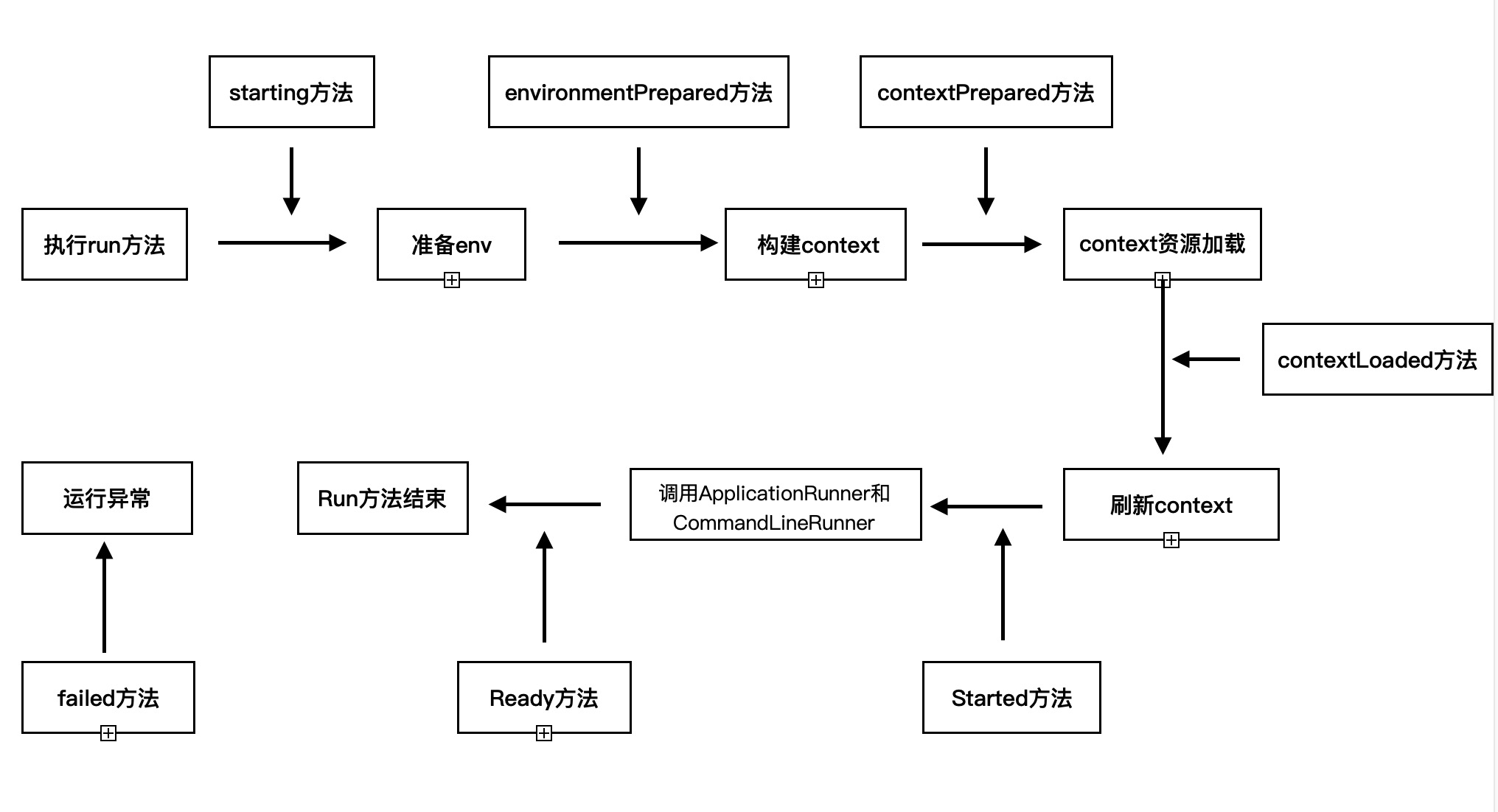
EventPublishingRunListener
SpringApplicationRunListener在配置文件中的实现类。
1
2
3
4
5
6
7
8
9
10
11
12
13
14
15
16
17
18
19
20
21
22
23
24
25
26
27
28
29
30
| public class EventPublishingRunListener implements SpringApplicationRunListener, Ordered {
public EventPublishingRunListener(SpringApplication application, String[] args) {
this.application = application;
this.args = args;
// 创建默认的广播事件
this.initialMulticaster = new SimpleApplicationEventMulticaster();
for (ApplicationListener<?> listener : application.getListeners()) {
// 将applicationListener与当前监听器进行关联
this.initialMulticaster.addApplicationListener(listener);
}
}
@Override
public void starting(ConfigurableBootstrapContext bootstrapContext) {
this.initialMulticaster
.multicastEvent(new ApplicationStartingEvent(bootstrapContext, this.application, this.args));
}
@Override
public void contextLoaded(ConfigurableApplicationContext context) {
for (ApplicationListener<?> listener : this.application.getListeners()) {
if (listener instanceof ApplicationContextAware) {
((ApplicationContextAware) listener).setApplicationContext(context);
}
context.addApplicationListener(listener);
}
this.initialMulticaster.multicastEvent(new ApplicationPreparedEvent(this.application, this.args, context));
}
}
|
EventPublishingRunListener针对不同的事件提供了不同的处理方法,但大致都相同,大致为三个流程:
contextLoaded()方法完成,上下文加载完成,我们就可以通过上下问的publishEvent来进行事件的发布,spring文档上的事件发布就是这个方法。
prepareEnvironment
加载配置属性
1
2
3
4
5
6
7
8
9
10
11
12
13
14
15
16
17
18
19
20
21
22
23
24
25
26
27
28
29
30
31
32
33
34
35
36
37
38
39
40
41
42
43
44
45
46
47
48
49
50
51
52
53
54
55
56
57
58
59
60
61
62
63
64
65
66
67
68
69
70
71
72
73
74
75
76
77
78
79
80
81
| private ConfigurableEnvironment prepareEnvironment(SpringApplicationRunListeners listeners,
DefaultBootstrapContext bootstrapContext, ApplicationArguments applicationArguments) {
// 获取或创建环境变量
ConfigurableEnvironment environment = getOrCreateEnvironment();
// 配置环境参数,主要为PropertySources和
configureEnvironment(environment, applicationArguments.getSourceArgs());
// 将ConfigurationPropertySource附加在指定环境的第一位,而且动态跟踪环境的添加和删除操作
ConfigurationPropertySources.attach(environment);
// 监听器启动
listeners.environmentPrepared(bootstrapContext, environment);
// 将defaultProperties配置移动到最后
DefaultPropertiesPropertySource.moveToEnd(environment);
// 判断环境配置中不包含environment-prefix
Assert.state(!environment.containsProperty("spring.main.environment-prefix"),
"Environment prefix cannot be set via properties.");
// 将环境绑定到Application
bindToSpringApplication(environment);
// 判断是否为定制环境,如果不是就则将环境转换为对应环境类型
if (!this.isCustomEnvironment) {
EnvironmentConverter environmentConverter = new EnvironmentConverter(getClassLoader());
environment = environmentConverter.convertEnvironmentIfNecessary(environment, deduceEnvironmentClass());
}
// 将ConfigurationPropertySource附加在指定环境的第一位,而且动态跟踪环境的添加和删除操作
ConfigurationPropertySources.attach(environment);
return environment;
}
// 有默认的工厂构造器
private ApplicationContextFactory applicationContextFactory = ApplicationContextFactory.DEFAULT;
private ConfigurableEnvironment getOrCreateEnvironment() {
// 判断是否为null
if (this.environment != null) {
return this.environment;
}
// 在初始化构造方法时,获取到的web类型为servlet,所以结果为ApplicationServletEnvironment
ConfigurableEnvironment environment = this.applicationContextFactory.createEnvironment(this.webApplicationType);
if (environment == null && this.applicationContextFactory != ApplicationContextFactory.DEFAULT) {
environment = ApplicationContextFactory.DEFAULT.createEnvironment(this.webApplicationType);
}
return (environment != null) ? environment : new ApplicationEnvironment();
}
// 配置环境属性
protected void configureEnvironment(ConfigurableEnvironment environment, String[] args) {
// 属性需要类型转换进行设置
if (this.addConversionService) {
// 使用默认的转换服务ApplicationConversionService
environment.setConversionService(new ApplicationConversionService());
}
// 配置PropertySources
configurePropertySources(environment, args);
// 配置profiles,其中没有相关逻辑代码
configureProfiles(environment, args);
}
// 存在默认属性时,它的优先级是最低的
// 如果存在命令行参数是,不包含在默认的资源属性中,它的优先级最高,包含的话,则会经过CompositePropertySource类进行去重处理
protected void configurePropertySources(ConfigurableEnvironment environment, String[] args) {
// 获取资源属性集合
MutablePropertySources sources = environment.getPropertySources();
// 如果默认配置非空,先对比,如果存在则替换,不存在则放入资源属性的最后位置
if (!CollectionUtils.isEmpty(this.defaultProperties)) {
DefaultPropertiesPropertySource.addOrMerge(this.defaultProperties, sources);
}
// 如果命令行属性存在
if (this.addCommandLineProperties && args.length > 0) {
// 如果默认属性资源中不包含该命令,则将命令放在第一个位置,如果包含,则通过CompositePropertySource处理
String name = CommandLinePropertySource.COMMAND_LINE_PROPERTY_SOURCE_NAME;
if (sources.contains(name)) {
PropertySource<?> source = sources.get(name);
CompositePropertySource composite = new CompositePropertySource(name);
composite.addPropertySource(
new SimpleCommandLinePropertySource("springApplicationCommandLineArgs", args));
composite.addPropertySource(source);
sources.replace(name, composite);
}
else {
sources.addFirst(new SimpleCommandLinePropertySource(args));
}
}
}
|
初始化ConfigurableEnvironment
ConfigurableEnvironment接口提供了当前运行环境的公开接口,比如配置文件profiles各类系统属性和变量的设置、添加、读取、合并等功能
1
2
3
4
5
6
7
8
9
10
11
12
13
14
15
16
17
| public interface ConfigurableEnvironment extends Environment, ConfigurablePropertyResolver {
// 设置激活的组集合
void setActiveProfiles(String... profiles);
// 向当前激活的组集合中添加一个profiles
void addActiveProfile(String profile);
// 设置默认的激活的组集合
void setDefaultProfiles(String... profiles);
// 获取当前环境对象中的属性源集合,也就是应用环境变量
MutablePropertySources getPropertySources();
// 获取虚拟机环境变量,该方法提供了直接配置虚拟机环境变量的入口
Map<String, Object> getSystemProperties();
// 获取操作系统环境变量
// 该方法提供了直接配置环境变量的入口
Map<String, Object> getSystemEnvironment();
// 合并指定环境中的配置到当前环境中
void merge(ConfigurableEnvironment parent);
}
|
1
2
3
4
5
6
7
8
9
| // 这个配置决定是否跳过BeanInfo类的扫描
private void configureIgnoreBeanInfo(ConfigurableEnvironment environment) {
// 如果系统配置中不包含 spring.beaninfo.ignore 配置,则将其默认设置为ture
if (System.getProperty(CachedIntrospectionResults.IGNORE_BEANINFO_PROPERTY_NAME) == null) {
Boolean ignore = environment.getProperty(CachedIntrospectionResults.IGNORE_BEANINFO_PROPERTY_NAME,
Boolean.class, Boolean.TRUE);
System.setProperty(CachedIntrospectionResults.IGNORE_BEANINFO_PROPERTY_NAME, ignore.toString());
}
}
|
打印Banner
1
2
3
4
5
6
7
8
9
10
11
12
13
14
15
16
17
18
| // 初始化SpringApplicationBannerPrinter类及其打印
private Banner printBanner(ConfigurableEnvironment environment) {
// 检查是否开启打印配置
if (this.bannerMode == Banner.Mode.OFF) {
return null;
}
// 获取资源加载器
ResourceLoader resourceLoader = (this.resourceLoader != null) ? this.resourceLoader
: new DefaultResourceLoader(null);
// 构建SpringApplicationBannerPrinter
SpringApplicationBannerPrinter bannerPrinter = new SpringApplicationBannerPrinter(resourceLoader, this.banner);
// 打印到日志中
if (this.bannerMode == Mode.LOG) {
return bannerPrinter.print(environment, this.mainApplicationClass, logger);
}
// 打印到控制台
return bannerPrinter.print(environment, this.mainApplicationClass, System.out);
}
|
prepareContext: 上下文准备
1
2
3
4
5
6
7
8
9
10
11
12
13
14
15
16
17
18
19
20
21
22
23
24
25
26
27
28
29
30
31
32
33
34
35
36
37
38
39
40
41
42
43
44
45
46
47
48
49
50
51
52
53
54
55
56
| private void prepareContext(DefaultBootstrapContext bootstrapContext, ConfigurableApplicationContext context,
ConfigurableEnvironment environment, SpringApplicationRunListeners listeners,
ApplicationArguments applicationArguments, Banner printedBanner) {
// 第一阶段: 准备阶段
// 上下文设置环境配置
context.setEnvironment(environment);
// 后置处理
postProcessApplicationContext(context);
// context刷新之前,使用ApplicationContextInitializer进行初始化。
applyInitializers(context);
// 第一阶段准备操作完成
// 第二阶段: 应用上下文加载
// 监听器处理,容器第一次加载
listeners.contextPrepared(context);
// 上下文已经准备好,BootstrapContext关闭
bootstrapContext.close(context);
// 记录start日志
if (this.logStartupInfo) {
logStartupInfo(context.getParent() == null);
logStartupProfileInfo(context);
}
// 获取ConfigurableListableBeanFactory并注册单例对象
ConfigurableListableBeanFactory beanFactory = context.getBeanFactory();
beanFactory.registerSingleton("springApplicationArguments", applicationArguments);
if (printedBanner != null) {
beanFactory.registerSingleton("springBootBanner", printedBanner);
}
// 如果是AbstractAutowireCapableBeanFactory的实现,则设置循环引用,默认为true。
if (beanFactory instanceof AbstractAutowireCapableBeanFactory) {
((AbstractAutowireCapableBeanFactory) beanFactory).setAllowCircularReferences(this.allowCircularReferences);
// 设置是否覆盖注册
if (beanFactory instanceof DefaultListableBeanFactory) {
((DefaultListableBeanFactory) beanFactory)
.setAllowBeanDefinitionOverriding(this.allowBeanDefinitionOverriding);
}
}
// 添加惰性初始化的bean工厂到上下文内部工厂列表
if (this.lazyInitialization) {
context.addBeanFactoryPostProcessor(new LazyInitializationBeanFactoryPostProcessor());
}
// 设置bean工厂
context.addBeanFactoryPostProcessor(new PropertySourceOrderingBeanFactoryPostProcessor(context));
// 加载全部配置源
Set<Object> sources = getAllSources();
Assert.notEmpty(sources, "Sources must not be empty");
// 将beans加载进应用上下文
load(context, sources.toArray(new Object[0]));
// 监听器: 通知监听器上下文加载完成
listeners.contextLoaded(context);
// 第二阶段加载完成
}
|
postProcessApplicationContext
后置处理
1
2
3
4
5
6
7
8
9
10
11
12
13
14
15
16
17
18
19
20
| protected void postProcessApplicationContext(ConfigurableApplicationContext context) {
// 如果beanNameGenerator不为null,则按照默认名字注册单例bean
if (this.beanNameGenerator != null) {
context.getBeanFactory().registerSingleton(AnnotationConfigUtils.CONFIGURATION_BEAN_NAME_GENERATOR,
this.beanNameGenerator);
}
// resourceLoader不为null,根据它的不同类型,设置资源加载器和类加载器
if (this.resourceLoader != null) {
if (context instanceof GenericApplicationContext) {
((GenericApplicationContext) context).setResourceLoader(this.resourceLoader);
}
if (context instanceof DefaultResourceLoader) {
((DefaultResourceLoader) context).setClassLoader(this.resourceLoader.getClassLoader());
}
}
// 如果有转换服务,则在上下文环境配置中设置为true
if (this.addConversionService) {
context.getBeanFactory().setConversionService(context.getEnvironment().getConversionService());
}
}
|
applyInitializers
初始化
1
2
3
4
5
6
7
8
9
10
11
12
| protected void applyInitializers(ConfigurableApplicationContext context) {
// 获取ApplicationContextInitializer集合并遍历
for (ApplicationContextInitializer initializer : getInitializers()) {
// 针对给定目标类解析给定泛型接口的单个类型参数,该目标类被假定为实现泛型接口,并可能为其类型变量声明具体类型
Class<?> requiredType = GenericTypeResolver.resolveTypeArgument(initializer.getClass(),
ApplicationContextInitializer.class);
// 判断类型是否匹配
Assert.isInstanceOf(requiredType, context, "Unable to call initializer.");
// 上下文进行初始化
initializer.initialize(context);
}
}
|
ConfigurableApplicationContext
1
2
3
4
5
6
| // spi接口
public interface ConfigurableApplicationContext extends ApplicationContext, Lifecycle, Closeable {
// 在任何bean定义之前,添加一个bean工厂到上下文内部的bean工厂列表中,并在刷新上下文时调用
// 该方法在配置上下文时调用
void addBeanFactoryPostProcessor(BeanFactoryPostProcessor postProcessor);
}
|
ConfigurableListableBeanFactory
1
2
3
4
5
| // 提供了更多的bean工厂接口,除了ConfigurableBeanFactory接口提供的外,还包含了分析,修改bean定义,以及预实例化单例的工具
public interface ConfigurableListableBeanFactory
extends ListableBeanFactory, AutowireCapableBeanFactory, ConfigurableBeanFactory {
}
|
目前它只有一个实现类: DefaultListableBeanFactory,这个类也是AnnotationConfigServletWebServerApplicationContext中beanFactory的默认实现。
AnnotationConfigServletWebServerApplicationContext继承于GenericApplicationContext
1
2
3
4
5
| public class GenericApplicationContext {
public GenericApplicationContext() {
this.beanFactory = new DefaultListableBeanFactory();
}
}
|
getAllSources
获取所有资源配置
1
2
3
4
5
6
7
8
9
10
11
12
| public Set<Object> getAllSources() {
Set<Object> allSources = new LinkedHashSet<>();
// 存在primarySources和sources时,进行设置
if (!CollectionUtils.isEmpty(this.primarySources)) {
allSources.addAll(this.primarySources);
}
if (!CollectionUtils.isEmpty(this.sources)) {
allSources.addAll(this.sources);
}
// 并设置为不可修改
return Collections.unmodifiableSet(allSources);
}
|
load()
加载配置源到上下文
1
2
3
4
5
6
7
8
9
10
11
12
13
14
15
16
17
18
19
20
21
| protected void load(ApplicationContext context, Object[] sources) {
if (logger.isDebugEnabled()) {
logger.debug("Loading source " + StringUtils.arrayToCommaDelimitedString(sources));
}
// 创建loader
BeanDefinitionLoader loader = createBeanDefinitionLoader(getBeanDefinitionRegistry(context), sources);
// 加载其它的配置
if (this.beanNameGenerator != null) {
loader.setBeanNameGenerator(this.beanNameGenerator);
}
if (this.resourceLoader != null) {
loader.setResourceLoader(this.resourceLoader);
}
if (this.environment != null) {
loader.setEnvironment(this.environment);
}
loader.load();
}
protected BeanDefinitionLoader createBeanDefinitionLoader(BeanDefinitionRegistry registry, Object[] sources) {
return new BeanDefinitionLoader(registry, sources);
}
|
BeanDefinitionLoader
从底层源加载bean定义,包括XML和JavaConfig
1
2
3
4
5
6
7
8
9
10
11
12
13
14
15
16
17
18
19
20
21
22
23
24
25
26
27
28
29
30
31
32
33
34
35
36
37
38
39
| class BeanDefinitionLoader {
// 支持三种类型的加载方式
BeanDefinitionLoader(BeanDefinitionRegistry registry, Object... sources) {
Assert.notNull(registry, "Registry must not be null");
Assert.notEmpty(sources, "Sources must not be empty");
this.sources = sources;
this.annotatedReader = new AnnotatedBeanDefinitionReader(registry);
this.xmlReader = (XML_ENABLED ? new XmlBeanDefinitionReader(registry) : null);
this.groovyReader = (isGroovyPresent() ? new GroovyBeanDefinitionReader(registry) : null);
this.scanner = new ClassPathBeanDefinitionScanner(registry);
this.scanner.addExcludeFilter(new ClassExcludeFilter(sources));
}
void load() {
for (Object source : this.sources) {
load(source);
}
}
// 加载资源,支持加载四种类型
private void load(Object source) {
Assert.notNull(source, "Source must not be null");
if (source instanceof Class<?>) {
load((Class<?>) source);
return;
}
if (source instanceof Resource) {
load((Resource) source);
return;
}
if (source instanceof Package) {
load((Package) source);
return;
}
if (source instanceof CharSequence) {
load((CharSequence) source);
return;
}
throw new IllegalArgumentException("Invalid source type " + source.getClass());
}
}
|
refreshContext: 初始化上下文
1
2
3
4
5
6
7
8
9
10
11
| private void refreshContext(ConfigurableApplicationContext context) {
if (this.registerShutdownHook) {
// 注册hooks
shutdownHook.registerApplicationContext(context);
}
refresh(context);
}
protected void refresh(ConfigurableApplicationContext applicationContext) {
applicationContext.refresh();
}
|
AbstractApplicationContent的refresh()方法
spring-content中的内容,每一步其实都有官方的注释。这之后,Spring上下文正式开启,SpringBoot的核心特性也随之启动。
1
2
3
4
5
6
7
8
9
10
11
12
13
14
15
16
17
18
19
20
21
22
23
24
25
26
27
28
29
30
31
32
33
34
35
36
37
38
39
40
41
42
43
44
45
46
47
48
49
50
51
52
53
54
55
56
57
58
59
60
61
62
63
64
65
66
67
68
69
70
71
72
| @Override
public void refresh() throws BeansException, IllegalStateException {
// 同步处理
synchronized (this.startupShutdownMonitor) {
// 启动标识
StartupStep contextRefresh = this.applicationStartup.start("spring.context.refresh");
// 准备刷新工作
prepareRefresh();
// 通知子类刷新内部bean工厂
ConfigurableListableBeanFactory beanFactory = obtainFreshBeanFactory();
// 为当前context准备bean工厂
prepareBeanFactory(beanFactory);
try {
// 运行context的子类对bean工厂进行后置处理
postProcessBeanFactory(beanFactory);
// 标识后置处理
StartupStep beanPostProcess = this.applicationStartup.start("spring.context.beans.post-process");
// 调用context在中注册为bean的工厂处理器
invokeBeanFactoryPostProcessors(beanFactory);
// 注册bean处理器
registerBeanPostProcessors(beanFactory);
// 后置处理结束
beanPostProcess.end();
// 初始化context的信息源,和国际化有关
initMessageSource();
// 初始化context中事件广播
initApplicationEventMulticaster();
// 初始化其它特殊子类的bean
onRefresh();
// 检查并注册事件监听器
registerListeners();
// 实例化所有非懒加载的单例bean
finishBeanFactoryInitialization(beanFactory);
// 最后一步: 发布对应事件
finishRefresh();
}
catch (BeansException ex) {
if (logger.isWarnEnabled()) {
logger.warn("Exception encountered during context initialization - " +
"cancelling refresh attempt: " + ex);
}
// 删除以及初始化的单例bean
destroyBeans();
// active复位
cancelRefresh(ex);
// Propagate exception to caller.
throw ex;
}
finally {
// 重置Spring核心中的公共内省缓存
resetCommonCaches();
// 流程结束标识
contextRefresh.end();
}
}
}
|
callRunners
通过spring的callRunner运行
1
2
3
4
5
6
7
8
9
10
11
12
13
14
15
16
17
18
19
20
21
22
23
24
25
26
27
28
29
30
31
32
33
34
| private void callRunners(ApplicationContext context, ApplicationArguments args) {
List<Object> runners = new ArrayList<>();
runners.addAll(context.getBeansOfType(ApplicationRunner.class).values());
runners.addAll(context.getBeansOfType(CommandLineRunner.class).values());
AnnotationAwareOrderComparator.sort(runners);
for (Object runner : new LinkedHashSet<>(runners)) {
if (runner instanceof ApplicationRunner) {
callRunner((ApplicationRunner) runner, args);
}
if (runner instanceof CommandLineRunner) {
callRunner((CommandLineRunner) runner, args);
}
}
}
private void callRunner(ApplicationRunner runner, ApplicationArguments args) {
try {
// 直接使用
(runner).run(args);
}
catch (Exception ex) {
throw new IllegalStateException("Failed to execute ApplicationRunner", ex);
}
}
private void callRunner(CommandLineRunner runner, ApplicationArguments args) {
try {
// 获取string参数数组
(runner).run(args.getSourceArgs());
}
catch (Exception ex) {
throw new IllegalStateException("Failed to execute CommandLineRunner", ex);
}
}
|